
What Bulloch Deed Records Contain
Bulloch County deed records come in several types. The Real Estate Division of the Clerk of Superior Court records deeds, plats, liens, UCC filings, executions, and related instruments. A warranty deed conveys the stated interest, backed by the promises written in the document. A quitclaim passes whatever the grantor may hold. A security deed secures debt. Its later cancellation shows payoff, not a new owner.
| Deed Type | What It Does | Common Use |
|---|---|---|
| Warranty deed | Conveys an interest with deed warranties | Ordinary sale |
| Quitclaim deed | Conveys any interest the grantor may hold | Family transfer or cleanup |
| Security deed | Secures debt against land | Mortgage financing |
| Executor or administrator deed | Conveys under estate authority | Probate transfer |
| Tax deed | Records a tax-sale interest | Delinquent-tax process |
Read parties, description, dates, consideration, and prior references. Also search later assignments, liens, releases, and cancellations. A deed transfers an interest; a mortgage, security deed, or lien only encumbers it.
Bulloch Clerk Deed Access
For hands-on help, the Clerk's Real Estate Division sits at 20 Siebald Street, Statesboro, Georgia 30458, with phone 912-764-9009 and email clerkinfo@bullochcounty.net. Staff will not draft deeds, fix defective papers, or give legal advice. Any document you bring must already satisfy witnessing and notarization rules.
Copies are available at the counter, by mail, and by email. Provide exact party names and a book/page reference when you have one. Mailed requests should include a self-addressed stamped envelope and payment. Expect three to five business days for processing.
Lien payments belong to the lienholder, not the Clerk. When a loan is paid off, the lender prepares a cancellation of the security deed. That cancellation does not convey ownership.
GSCCCA Bulloch Deed Fields
The GSCCCA Real Estate Index lets you search by name, county or wider geography, date range, party type, and instrument type. Lot, block, unit, and book/page fields help too.
| Field | Use | Check |
|---|---|---|
| Name | Search exact grantor or grantee | Match the tract |
| Party type | Separate giving and receiving parties | Confirm on image |
| Date range | Narrow a transfer period | Keep both dates |
| Book/page | Open a known citation | Image availability |
| Subdivision, block, lot | Find platted land | Plat docket |
The official index source does not display its full instrument list in advance. Save every query. Record each result too. Otherwise a narrow hit list is easily mistaken for a complete Bulloch chain.
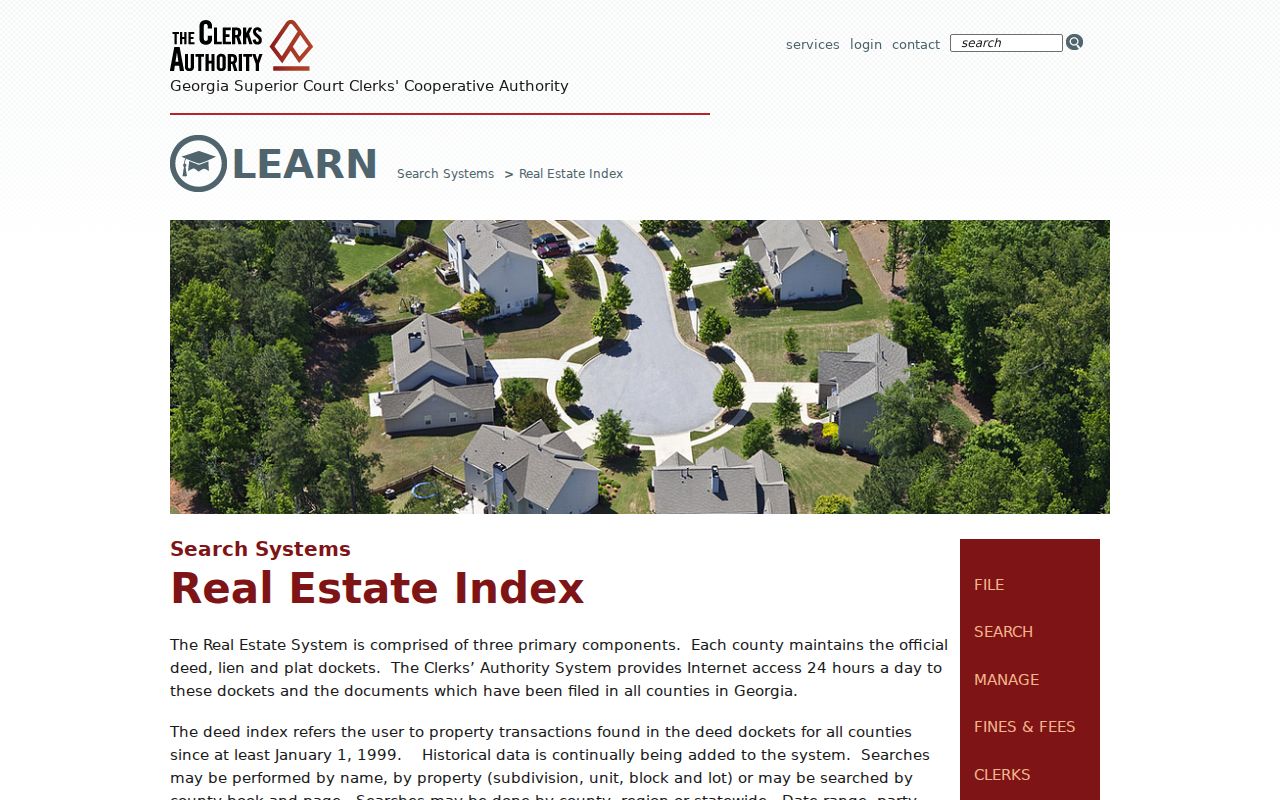
It is the web starting point for party, date, property, and book-page searches.
Build a Bulloch Grantor Chain
A grantor gives an interest. A grantee receives it. Start with the assessor owner as grantee, find the acquisition deed, then search its grantor as an earlier grantee, repeating only when the tract details match.
- Copy the current Owner and legal description from qPublic.
- Search that party as grantee and open the likely deed.
- Log both parties, dates, deed type, and book/page.
- Search the grantor as an earlier grantee and repeat.
- Confirm each link with the same description, plat, and PT-61.
- Grantor
- The party conveying the stated interest.
- Grantee
- The party receiving the stated interest.
- Chain of title
- The linked sequence of transfers for one tract.
- Book and page
- A citation used to retrieve the recorded instrument.
Bulloch PT-61 Sale Check
Deed consideration and parcel-card sale price can mislead. A stated figure may not describe a standard market deal. The PT-61 Index adds buyer, seller, addresses, transfer context, price, and deed or plat links. One 2024 Bulloch entry listed $706,200. It carried a current-use-to-highest-and-best reason, so pull the deed, value history, and covenant facts before using it as a comparable sale. Check zero-price, family, and entity transfers the same way.
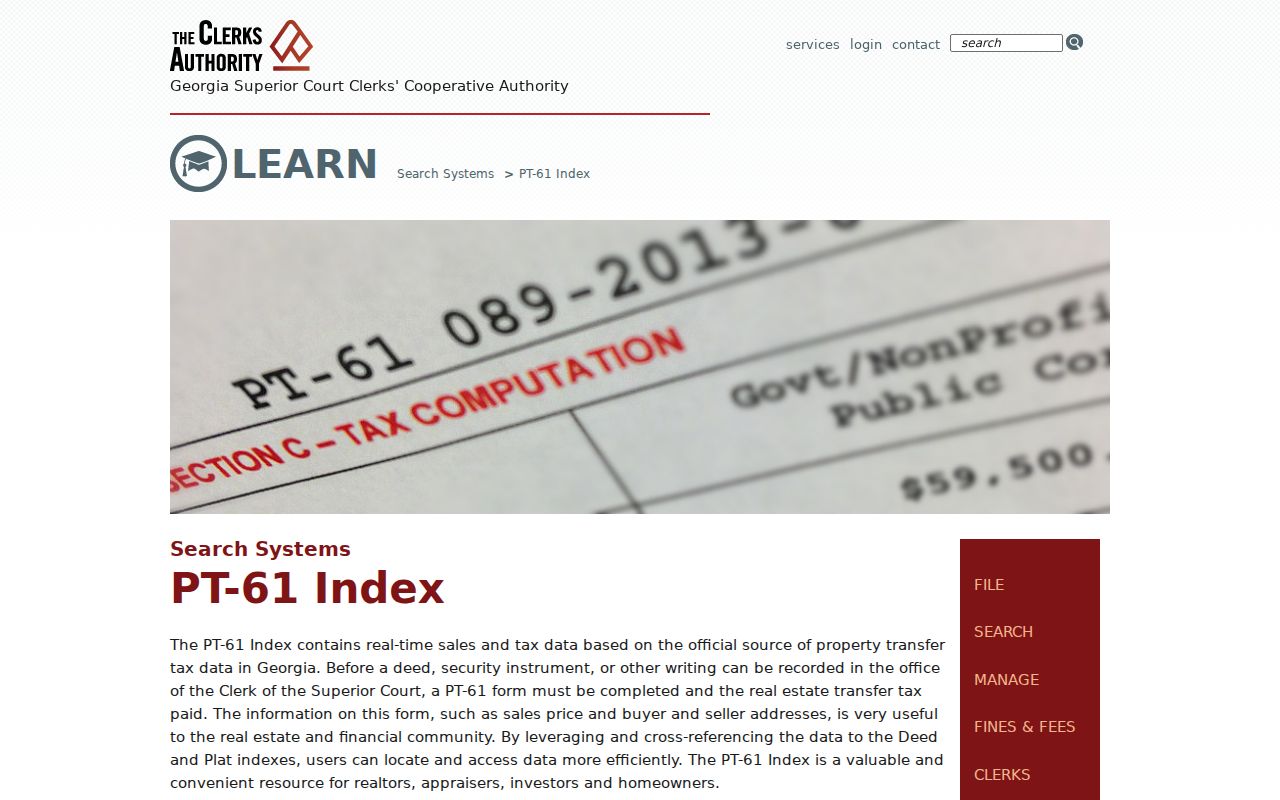
It shows why sale rows and recorded deeds sometimes disagree at first glance.
Bulloch Plats and Parent Tracts
A Bulloch deed may cite a subdivision plat, a lot and block, or a parent tract. Search the GSCCCA Plat Index by plat name, county, book/page, and instrument type; its statewide operational baseline is January 1, 2004. Image coverage varies. Lakeview Pines Phase 1 shows how: its plat identifies two parent parcels, 42 units, rights of way, common ponds, wetlands, and dedicated roads. A planning-stage plat can appear before the Clerk records the final instrument and the assessor creates lot cards. Preserve each stage. Move from parent parcel to final plat to deeds. Never infer a completed split from a sketch alone.
Bulloch Liens and Releases
Search the deed, lien, plat, and General Execution dockets for security deeds, assignments, mechanic's liens, judgments, tax liens, fixture filings, covenants, and easements. A hit does not prove current enforceability. Find the later cancellation, satisfaction, release, termination, or court order, and order a certified copy when needed. A no-hit can reflect spelling, dates, or coverage. Verify key findings against the recorded image. The real-property docket overview explains how the deed, lien, and plat systems differ.
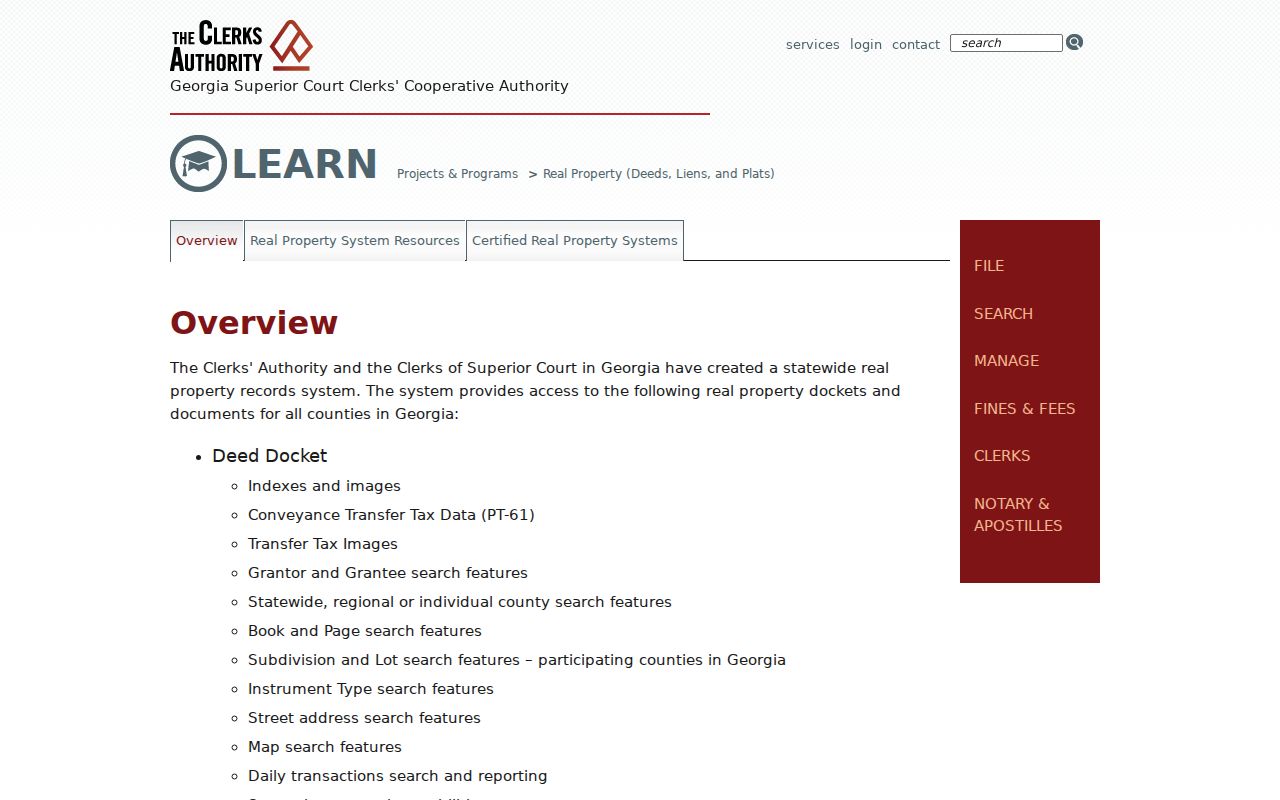
The official overview makes one thing clear. A deed result should always be followed by separate lien, release, and plat checks.
Older Bulloch Deed Books
The online statewide baseline is January 1, 1999. Historical data keeps being added, but older Bulloch images are not guaranteed online. Georgia Archives holds a Bulloch deed-index series covering 1895 through 1911, with grantors, grantees, signature dates, record dates, and book/page. Gather the last firm citation. Add the parties, legal description, and suspected predecessor. Send everything to the Clerk or Georgia Archives. Newspapers and directories can supply leads but cannot fill a title gap.
Coverage boundary. Treat 1999 as the statewide web baseline, not proof that each older Bulloch image is absent or present.
Bulloch Filing Alerts
The free Filing Activity Notification Service takes a name or address plus an email or phone channel. It flags later deeds, liens, plats, and personal-property filings. It is a fraud-monitoring aid, not a title ruling. Check every alert against the image, parcel description, and parties.
Bulloch Estate Deed Links
Ownership chains often run through probate in Bulloch County. The Probate Court handles estates for Georgia residents and for nonresidents holding Georgia land. Begin with the deed itself. From there, track down the estate file. Use the exact decedent name and name variants. Note the death date, the county connection, and the case number. That file identifies the executor, administrator, will, or other authority over the property.
Next, return to the Bulloch County deed index. Search it for an executor or administrator deed, a distribution, an affidavit, or a later conveyance out of the estate. A death record or a family link alone proves nothing about parcel ownership. The estate paperwork and the recorded instrument must both point to the same legal description.
If provider access fails, request the public file from Probate. Request the deed from the Clerk. Restricted or sealed material stays outside the public property records trail.
Obtain a Bulloch Deed Copy
An online search result may open a deed image. Account and print fees can apply. The GSCCCA filing guide lists $25 for many deed, security-deed, cancellation, lien, and release filings. It adds $10 per page for plats. Remember that these are filing figures, not guaranteed copy fees. Confirm current copy and certification costs with the Bulloch County Clerk before ordering.
For local access, use the counter, mail, or email. Provide the party name and the book and page reference. Ask for certification whenever legal proof of the deed records is required.
Recorded, not guaranteed. Bulloch County deed records show indexed instruments. They do not resolve unrecorded interests or replace a professional title search.